The Name We Carry
الرَّاحِمُونَ يَرحَمُهُمُ الرَّحمَنُ "Those who show mercy, Allah shows mercy to them" — Prophet Muhammad ﷽

Hazrat Haji Waris Ali Shah

Our Foundation draws its name and spirit from a saint whose message was simple: love for all, service to all.

یہ صفحہ اردو میں پڑھیں ←

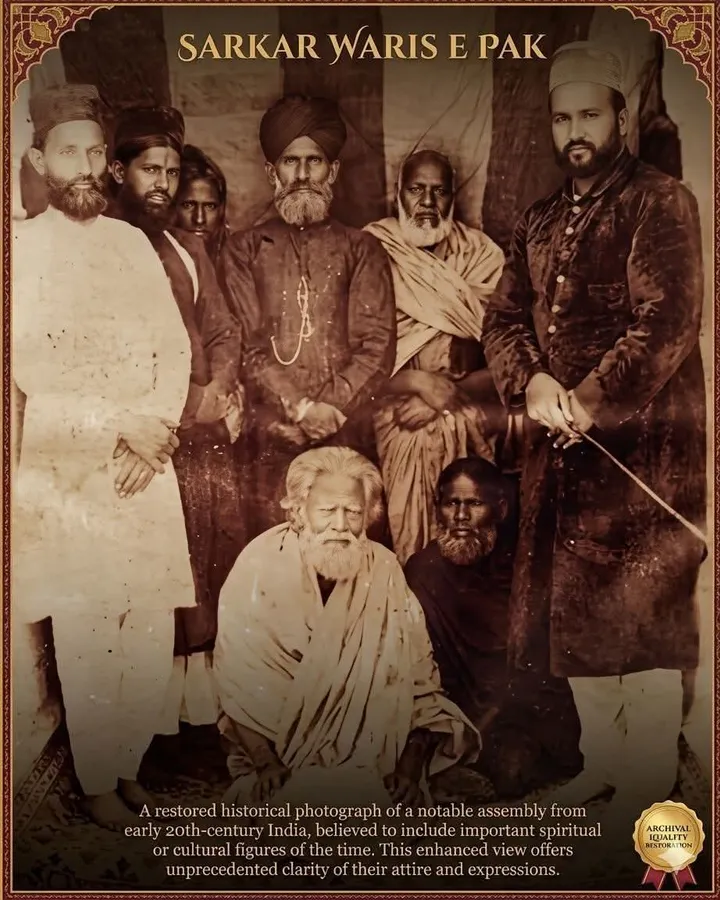
Historical photograph of Hazrat Haji Waris Ali Shah — Sarkar Waris E Pak

Who Was Hazrat Haji Waris Ali Shah?

Hazrat Haji Waris Ali Shah (1817–1905) was a revered Sufi saint of Dewa Sharif, a town near Barabanki in what is now Uttar Pradesh, India. He was the founder of the Warsi Sufi order and is counted among the most beloved saints of the 19th-century subcontinent.

Born into a family of deep piety and learning, he dedicated his entire life to spiritual service. His khanqah (spiritual lodge) at Dewa Sharif became a gathering place for Muslims, Hindus and Christians alike — a living testament to his conviction that the love of the Divine transcends all boundaries of religion, caste and language.

His followers — the Warsi silsila — spread across the subcontinent, carrying his message of selfless service, humility and unity. Even today, the annual Urs at Dewa Sharif draws hundreds of thousands of devotees from across South Asia, making it one of the largest Sufi gatherings on the subcontinent.

“The greatest worship is service to humanity.”

At a Glance

  • Born16 July 1817, Dewa Sharif, Barabanki, India
  • Passed Away1905, Dewa Sharif
  • OrderWarsi Silsila (rooted in the Qadiriyya tradition)
  • ShrineDewa Sharif, Barabanki, Uttar Pradesh, India
  • Core TeachingUniversal love; service to all without discrimination
  • Annual UrsDraws hundreds of thousands of devotees from across South Asia
His Message

Core Teachings

Six principles that guided his life and that continue to shape this Foundation's work.

Universal Love

He welcomed people of every faith — Muslim, Hindu, Christian — into his presence equally. Love of the Divine, he taught, could not be separate from love of all humankind.

Service Without Discrimination

His famous declaration — "Services to humanity, without discrimination" — became the motto that the Foundation carries today. No deserving soul was turned away on account of religion, caste or background.

Humility

Despite attracting hundreds of thousands of followers, he lived simply and shunned personal glory. His spiritual stature was reflected in his effortless accessibility to the poorest among the poor.

Practical Spirituality

He did not separate the inner spiritual journey from the outward duty to society. True tasawwuf (Sufism), he showed, is not retreat from the world but active, compassionate engagement with it.

Unity Across Faiths

In a period of growing communal tension across the subcontinent, his gatherings stood as a peaceful counter-example — proof that sincere faith draws communities together rather than apart.

Trust & Integrity

He was known for absolute honesty in all dealings. Resources entrusted to him were used transparently for the welfare of others — a principle his Foundation enshrines in its 0% administrative-deduction policy.

Dewa Sharif & the Warsi Legacy in Pakistan

After the Partition of 1947, millions of Muslims from across the subcontinent settled in what became Pakistan, bringing with them their devotion to Hazrat Haji Waris Ali Shah. Communities with roots in the Warsi tradition established themselves in Karachi, Lahore, Hyderabad and across Sindh.

The founders of this Foundation — themselves descendants of and devotees in the Warsi tradition — carry that legacy directly. Choosing his name for the Foundation was not symbolic alone; it was a commitment to live by his principles in every programme and every act of service.

The Foundation is registered and based in Gulshan-e-Maymar, Karachi — a neighbourhood home to a large population of families with origins in what is now Uttar Pradesh, many of whom have a deep connection to the Warsi tradition. Serving them and their neighbours is a natural expression of this heritage.

The Warsi Silsila

A Sufi order founded by Hazrat Haji Waris Ali Shah, rooted in the Qadiriyya tradition. It emphasises service, universal brotherhood, and the inner purification of the self through love of God and love of humanity.

Dewa Sharif Today

Dewa Sharif in Barabanki, Uttar Pradesh remains an active spiritual centre. The annual Urs (death anniversary) is one of the largest Sufi gatherings in South Asia, drawing people from Pakistan, Bangladesh, the UK and beyond.

Our Founding Commitment

Naming the Foundation after Hazrat Haji Waris Ali Shah is a pledge: every ration bag packed, every free clinic held, every child supported in school is an act of living by his legacy.

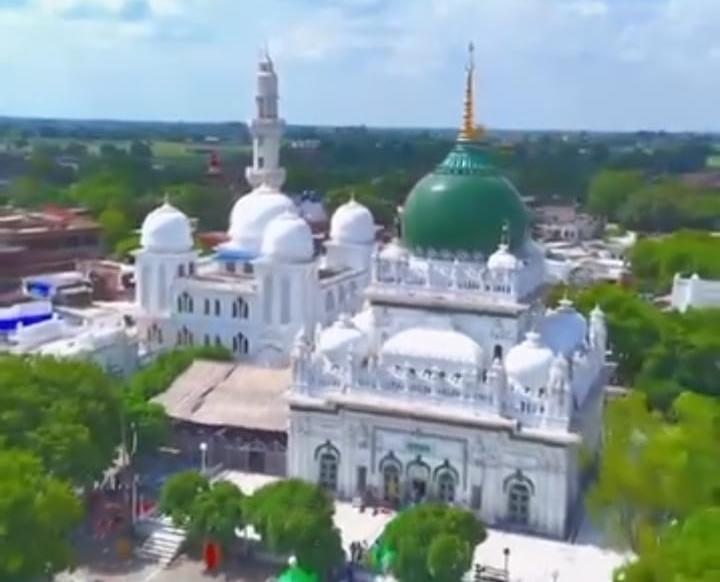
Dewa Sharif

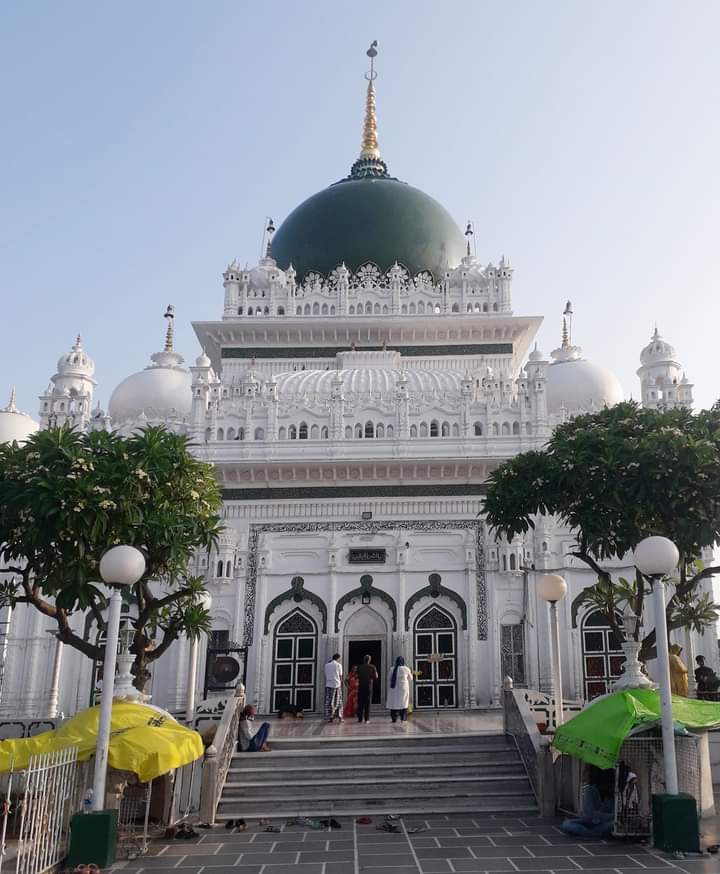
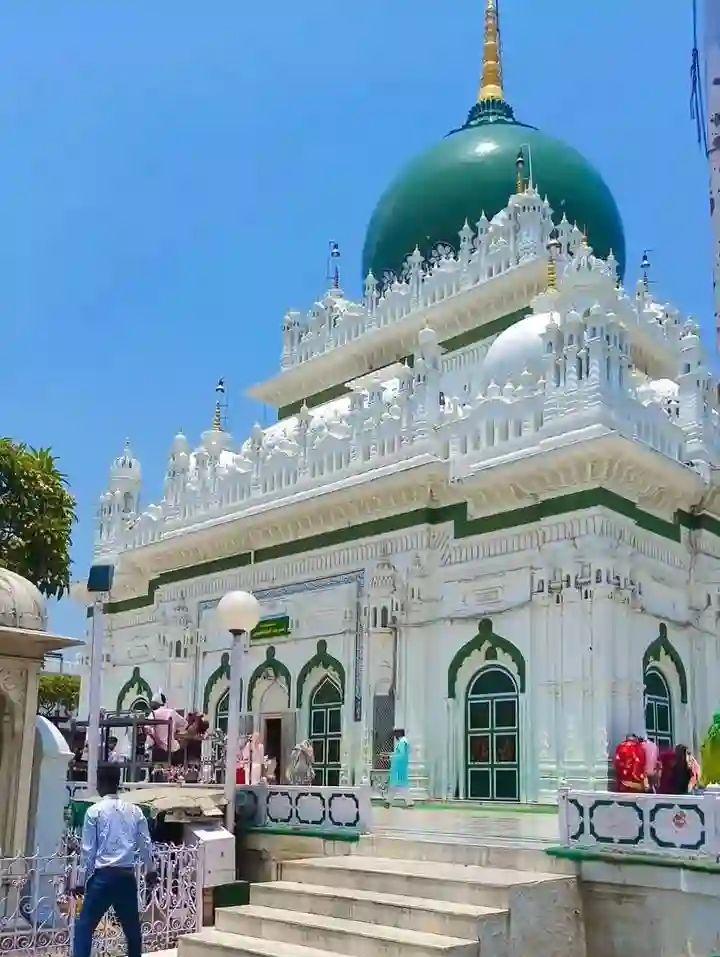
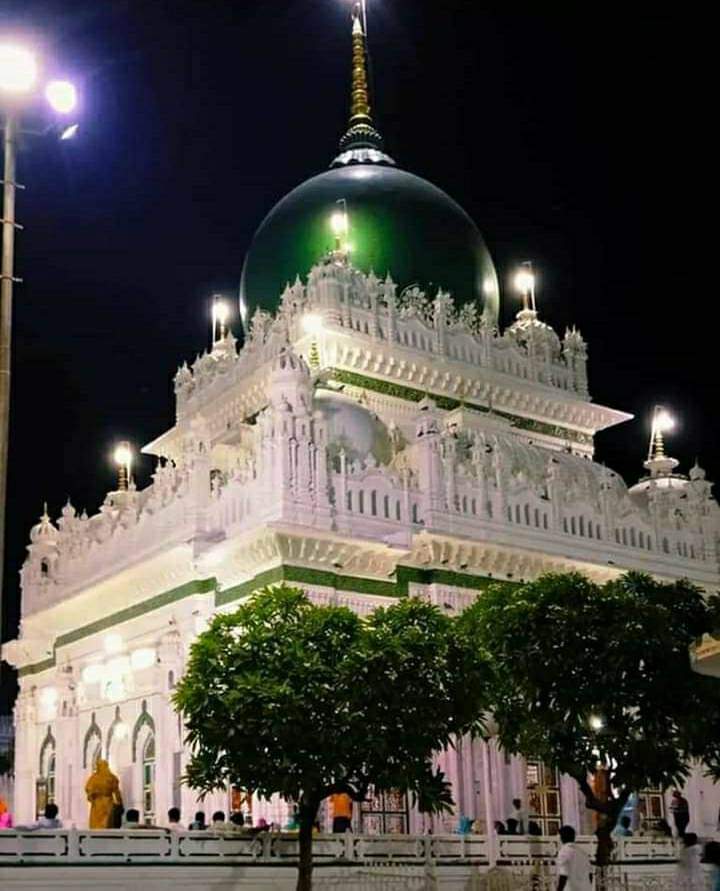
Mazar Shareef of Hazrat Waris Ali Shah

The sacred shrine at Dewa Sharif, Barabanki — spiritual home of the Warsi Silsila and the living heart of his legacy.

Aerial view of Mazar Shareef of Hazrat Haji Waris Ali Shah, Dewa Sharif
Front view of Mazar Shareef of Hazrat Haji Waris Ali Shah, Dewa Sharif
Side view of Mazar Shareef of Hazrat Haji Waris Ali Shah, Dewa Sharif
Night view of illuminated Mazar Shareef of Hazrat Haji Waris Ali Shah, Dewa Sharif
His Life

From Dewa to Berlin

A life spent almost entirely in service, and unusually for a Sufi of his time and place, spent partly on the road.

1817

Born at Dewa, Barabanki, in the Awadh region — 16 July 1817, 1 Ramadan 1232 AH. Named Mitthan Miya as a child. His father, Sayyid Qurban Ali Shah, is buried in the same town.

Boyhood

Showed an inclination to religious life very early, and attached himself to Khadim Ali Shah, a dervish of Golaganj in Lucknow, remaining with him until his guide’s death in 1832–33 — when he was about sixteen.

Travels

Performed Hajj many times and travelled far beyond the subcontinent. In Europe he met the Sultan of Turkey and Otto von Bismarck in Berlin; some accounts add an audience with Queen Victoria in England. For a 19th-century South Asian Sufi this reach was remarkable.

His circle

Admitted people to his order across faiths and stations — landowners, barristers, poets and the poorest alike. Among the best documented are the Urdu poet Bedam Shah Warsi and Mushir Hussain Kidwai of Gadia, the barrister and pan-Islamist politician.

1905

Passed away at Dewa on 7 April 1905, 1 Safar 1323 AH, and was buried there. His Urs is observed at his tomb on 1 Safar each year.

On the dates

Documented accounts give 16 July 1817 (1 Ramadan 1232 AH) for his birth and 7 April 1905 (1 Safar 1323 AH) for his passing. Some accounts give his birth year as 1819, and both are found in devotional literature. We give the documented dates and note the variance rather than choose silently.

By Many Names

Names, Titles and the Word “Warsi”

How he is known

Full name
Sayyid Waris Ali Shah Kazmi al-Musavi
Devotional name
Sarkar Waris Pak · Haji Waris Pak
Childhood name
Mitthan Miya
Titles
Imam-ul-Aulia · Ashraful Alameen · Waris-e-Panjtan · Aalam Panaah
Lineage
Held to descend from Imam Husain through Musa al-Kazim

“Warsi” — a name he gave away

He gave his followers the name Warsi, and families across Pakistan and India still carry it. It is why this Foundation’s founders are Warsi, and why the order itself is the Warsi Silsila.

He let people keep their names

One detail says a great deal about him. He held a liberal view of his own order and permitted those who accepted Islam to keep the names they already had — refusing to make identity a price of belonging. It is the same instinct as his motto: no one turned away.

Two Gatherings

The Urs and the Dewa Mela

These are two different events at Dewa Sharif, and they are often confused with one another.

His Urs — 1 Safar

The anniversary of his passing, observed each year at his tomb at Dewa Sharif. Devotees travel from across Pakistan, India, Bangladesh and the diaspora.

The Dewa Mela — October to November

A fair he himself began in memory of his father, Sayyid Qurban Ali Shah. It draws close to a million people, Muslims and Hindus together — which is perhaps the plainest evidence of what his teaching actually achieved.

The Foundation observes his Urs at a darbar in Gulshan-e-Maymar, Karachi. The most recent ceremony was on 1 May 2026, alongside the Foundation’s inauguration. No date has been announced for the next one — register your interest and we will let you know. Details of the Karachi observance are on the Urs Mubarak page.

His Words

Kept by Those Who Followed Him

Malfuzat-i-Haji Waris Ali Shah

His sayings, collected by his follower Khuda Bakhsh Sheikh, who also wrote a biography of him, Tohmat-ul-Asfiya. Much of what is known of how he spoke comes through these.

Bedam Shah Warsi

Among his followers was the Urdu poet Bedam Shah Warsi, whose verse carried the order’s devotional voice into Urdu literature and is still sung in qawwali today.

Where this comes from

The biographical detail on this page follows published sources rather than oral tradition, chiefly Masoodul Hasan, Sufism and English Literature (2007); Nabi Hadi, Dictionary of Indo-Persian Literature (1994); M. Naeem Qureshi, Pan-Islam in British Indian Politics (Brill, 1999); and Zahurul Hassan Sharib, The Sufi Saints of the Indian Subcontinent (2006). Where accounts differ, we say so. Where a claim is widely repeated but thinly evidenced, we leave it out.

Questions

Common Questions

Where is the shrine (mazar) of Hazrat Haji Waris Ali Shah?

At Dewa Sharif, in Barabanki district, Uttar Pradesh, India — the town where he was born and where he died. His father Sayyid Qurban Ali Shah is buried in the same town. The Haji Waris Ali Shah Foundation is a separate, present-day welfare society in Karachi named in his honour; it does not administer the shrine at Dewa Sharif.

When was Hazrat Haji Waris Ali Shah born, and when did he pass away?

Documented accounts give his birth as 16 July 1817 (1 Ramadan 1232 AH) and his passing as 7 April 1905 (1 Safar 1323 AH), both at Dewa. Some accounts give his birth year as 1819.

What is the Warsi Silsila?

The Sufi order he founded, rooted in the Qadiriyya tradition. Its emphasis is on service to people, universal brotherhood and purification of the self. He gave followers the name “Warsi”, which many carry to this day.

Why is he called Sarkar Waris Pak?

It is the affectionate devotional name used for him across South Asia. He is also known as Haji Waris Ali Shah, Haji Waris Pak, and by the titles Imam-ul-Aulia, Ashraful Alameen, Waris-e-Panjtan and Aalam Panaah. In childhood he was called Mitthan Miya.

When is the Urs at Dewa Sharif held?

His own Urs is observed at his tomb on 1 Safar, the anniversary of his passing. Separately, the Dewa Mela is held in October–November each year — a fair he himself began in memory of his father, which draws close to a million Muslims and Hindus together.

Did he really travel to Europe?

Yes — unusually for a South Asian Sufi of his era. He performed Hajj many times and travelled widely, and documented accounts record that in Europe he met the Sultan of Turkey and Otto von Bismarck in Berlin. Sources also suggest he may have travelled to England and been received by Queen Victoria, though that account is less certain.

What is the connection between the saint and this Foundation?

The Foundation is named after him and its founders are devotees within the Warsi tradition. His declaration — service to humanity without discrimination — is the Foundation's motto, and is why it operates a 0% administrative deduction policy on public donations. The Foundation is a welfare society, not a shrine.

“Services to humanity, without discrimination.”

This is the spirit that guides every decision we make. See how we carry it into practice today.

This page honours the historical Sufi figure after whom the Foundation is named, presented in a general and respectful spirit.